











































How We Assessed the Best No Wagering Casinos
The evaluation for this category differed significantly from standard casino reviews. Rather than prioritising game counts or deposit match sizes, the primary metric was how genuinely and consistently each casino eliminates wagering requirements across its bonus portfolio. A casino offering one no-wagering welcome deal but attaching 35x playthrough to every subsequent promotion scored lower than a site applying zero-wagering universally.
Each shortlisted casino was cross-referenced against the UKGC public register to confirm active licensing. Welcome bonus terms were verified directly on each operator's promotions page during April 2026, with particular attention to spin values, expiry windows, win caps, and any hidden conversion conditions that effectively function as wagering by another name. Trustpilot reviews were filtered specifically for complaints mentioning bonus terms, withheld winnings from free spins, and discrepancies between advertised and actual no-wagering policies. Casino Guru Safety Index scores provided a secondary trust indicator. Since the UKGC's January 2026 regulatory change capped wagering requirements at 10x across all licensed operators, the competitive landscape has shifted considerably. Many casinos that previously imposed 30x-40x playthrough have either dropped to 10x or removed wagering entirely. The five casinos selected here were already committed to wager-free bonuses before the regulatory shift, which distinguishes genuine no-wagering operators from those simply complying with a new ceiling.
Top No Wagering Casinos Ranked
| Casino | Operator | BetBond Rating | Welcome Bonus | Wagering Requirement | Key Strength |
|---|---|---|---|---|---|
| PlayOJO | Skill On Net Ltd | 8.8/10 | 80 Free Spins on Big Bass Bonanza | 0x (all bonuses) | No-wagering pioneer with OJOplus cashback |
| MrQ | Lindar Media Ltd | 8.5/10 | Up to 200 Free Spins on Fishin' BIGGER Pots of Gold | 0x (all bonuses) | Instant withdrawals with £10 guarantee |
| Betfred Casino | Petfre (Gibraltar) Ltd | 8.6/10 | 200 Free Spins (choose your package) | 0x (welcome + ongoing) | Largest legacy operator with no-wagering policy |
| BetMGM | LeoVegas Gaming PLC | 8.3/10 | 200 Free Spins on Big Bass Splash | 0x (on free spin winnings) | Exclusive BetMGM games with wager-free spins |
| Sky Vegas | Bonne Terre Gaming Ltd | 8.4/10 | 50 No-Deposit Spins + 200 Deposit Spins | 0x (all free spin winnings) | Only major casino offering no-deposit no-wagering spins |
Every casino listed holds a valid UKGC licence. Bonuses and features are subject to change — always verify the latest terms directly on each casino's website before depositing.
PlayOJO — Strongest Overall No Wagering Casino
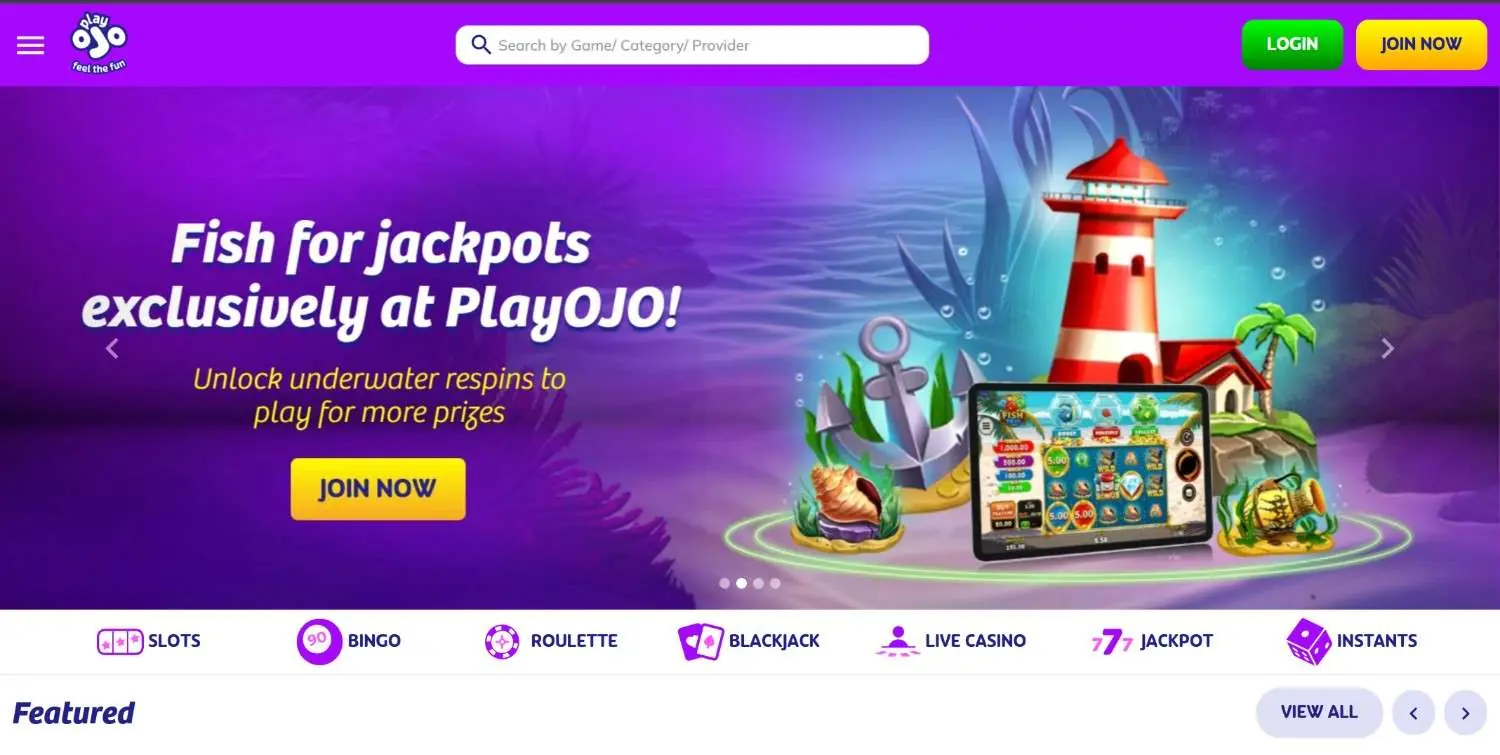
PlayOJO set the template for wager-free casino bonuses when it launched in 2017, and seven years later it remains the benchmark against which every other no wagering casino in the UK is measured. Operated by Skill On Net Ltd under UKGC licence 39326 and dual-licensed with the Malta Gaming Authority, PlayOJO applies zero wagering requirements across its entire bonus structure — not just the welcome offer, but every Kicker, every free spin bundle, and every OJOplus cashback credit. Players who appreciate PlayOJO's operator approach may also find sites like Spin Genie of interest, as both operate under the Skill On Net umbrella.
The current welcome deal awards 80 free spins on Big Bass Bonanza upon a minimum £10 first deposit, with each spin valued at £0.10. Winnings transfer directly to the player's real cash balance with no playthrough, no win cap, and no conversion conditions. The OJOplus loyalty system compounds this advantage by returning a percentage of every wager — win or lose — as withdrawable cash, making PlayOJO one of the few no wagering casino sites where the loyalty programme itself carries zero strings.
The game library exceeds 3,000 titles from providers including NetEnt, Pragmatic Play, Play'n GO, Evolution Gaming, and Big Time Gaming. Live dealer coverage runs to approximately 260 tables across blackjack, roulette, baccarat, and game shows. Payment options include Visa, Mastercard, PayPal, Apple Pay, and Trustly, with PayPal withdrawals typically processed within 24 hours.
The trade-off is Trustpilot sentiment. PlayOJO currently sits at approximately 2.1 out of 5 based on over 14,000 reviews (April 2026 data). While over 40% of those reviews are five-star, a recurring theme in negative feedback concerns verification delays and withdrawal processing outside PayPal. It should also be noted that Skill On Net Ltd received a UKGC regulatory settlement of approximately £300,000 in May 2023 for failings related to anti-money laundering and safer gambling measures. Casino Guru rates PlayOJO at 8.6 out of 10 on its Safety Index, classifying it as High.
PlayOJO Dossier
| Metric | Details |
|---|---|
| Operator | Skill On Net Ltd, UKGC licence 39326 |
| No Wagering Rating | 0x on all bonuses, promotions, and cashback — industry-leading |
| Key Strength | Universal no-wagering policy across every reward type |
| Game Library | 3,000+ games from NetEnt, Pragmatic Play, Evolution, Play'n GO, BTG |
| Bonus Highlight | 80 wager-free spins plus OJOplus real-cash-back on every bet |
| The Catch | Trustpilot rating below average; some KYC delay complaints |
| Best Suited For | Slots players who want every bonus penny withdrawable from day one |
MrQ — Top No Wagering Casino for Instant Withdrawals
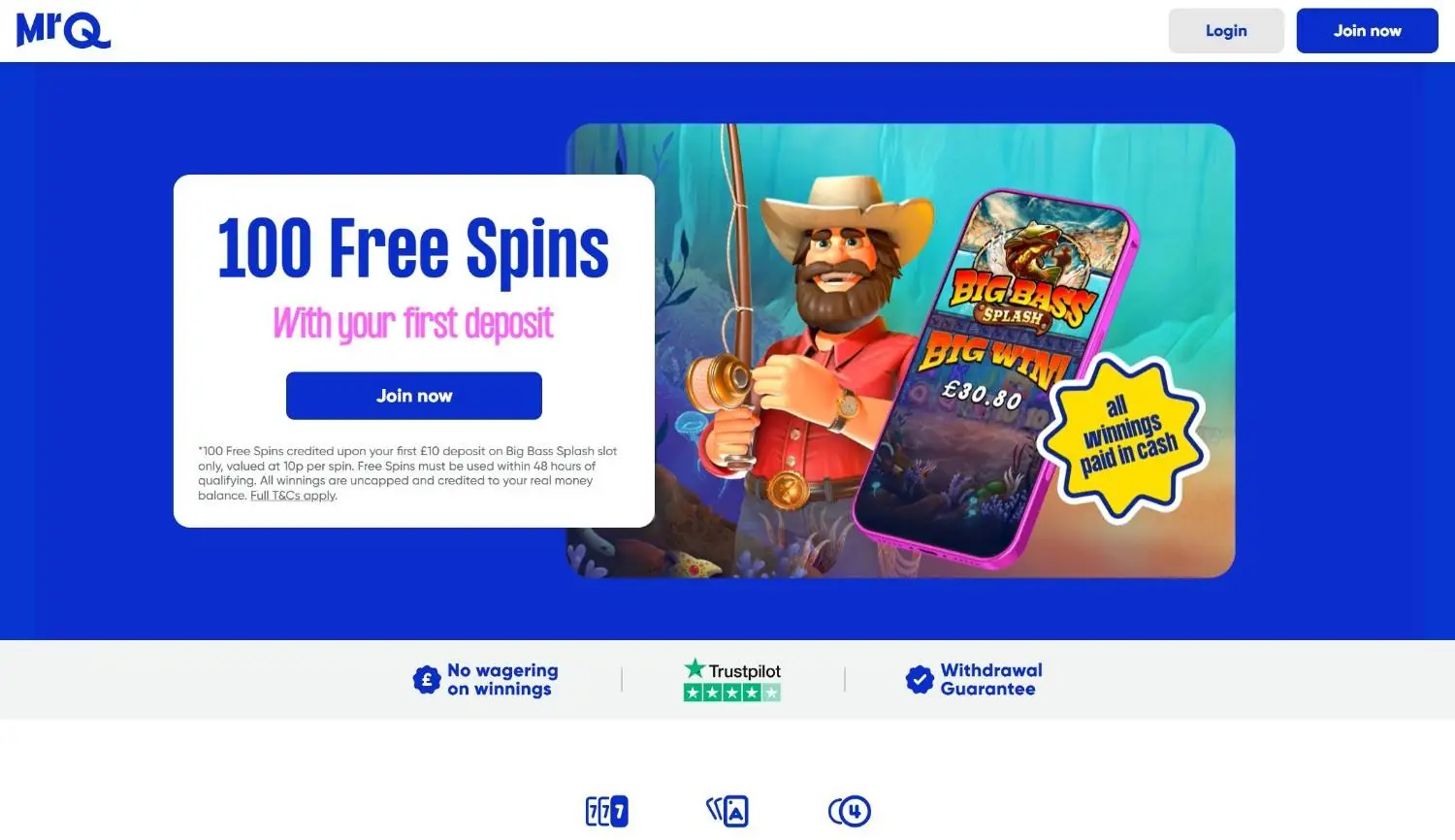
MrQ distinguishes itself in the no wagering casinos UK market with a promise that goes beyond zero playthrough: if your withdrawal is not processed within 60 seconds, MrQ pays you £10 in cash. Operated by Lindar Media Ltd under UKGC licence 51250 and launched in 2018, MrQ has built its entire brand identity around transparency, wager-free bonuses, and rapid cashouts.
New players receive up to 200 free spins on Fishin' BIGGER Pots of Gold, distributed over four days at 50 spins per day, each requiring a £10 deposit and £10 spend to unlock. All spins are valued at £0.10 and carry absolutely no wagering requirements — winnings go straight to the cash balance. MrQ also offers 10 free spins upon mobile verification with no deposit required at all, providing a risk-free entry point.
The game catalogue runs to approximately 1,000 titles from over 25 providers, including NetEnt, Pragmatic Play, Quickspin, and No Limit City. Notably, independent testing by review sites has confirmed that MrQ consistently offers the highest available RTP versions of popular slots — a detail that directly affects player returns and is rarely disclosed by competitors. Live dealer coverage is more limited, with around 50 tables, which trails larger operators significantly.
On Trustpilot, MrQ scores 4.0 out of 5 from approximately 14,800 reviews (April 2026), one of the highest ratings among UK casino sites. Players consistently praise withdrawal speed and the clarity of bonus terms. Casino Guru assigns a Safety Index of 6.9, which is above average but pulled down partly by a £690,947 regulatory payment made between July 2021 and September 2022 relating to money laundering prevention protocols. Customer support operates via live chat (9am-9pm Monday to Friday) and email, with no weekend live chat — a notable gap for a casino targeting casual players who often play at weekends. Those exploring the broader Lindar Media landscape can review MrQ sister sites for a wider picture of the operator's UK presence.
MrQ Dossier
| Metric | Details |
|---|---|
| Operator | Lindar Media Ltd, UKGC licence 51250 |
| No Wagering Rating | 0x on every promotion — no exceptions across entire site |
| Key Strength | Instant withdrawals with £10 compensation guarantee if delayed |
| Game Library | 1,000+ games from NetEnt, Pragmatic Play, Quickspin, No Limit City |
| Bonus Highlight | Up to 200 wager-free spins plus 10 no-deposit spins on verification |
| The Catch | Limited live casino; no weekend live chat support |
| Best Suited For | Players who prioritise fast cashouts and highest-RTP slot versions |
Betfred Casino — Best No Wagering Casino with Legacy Reputation
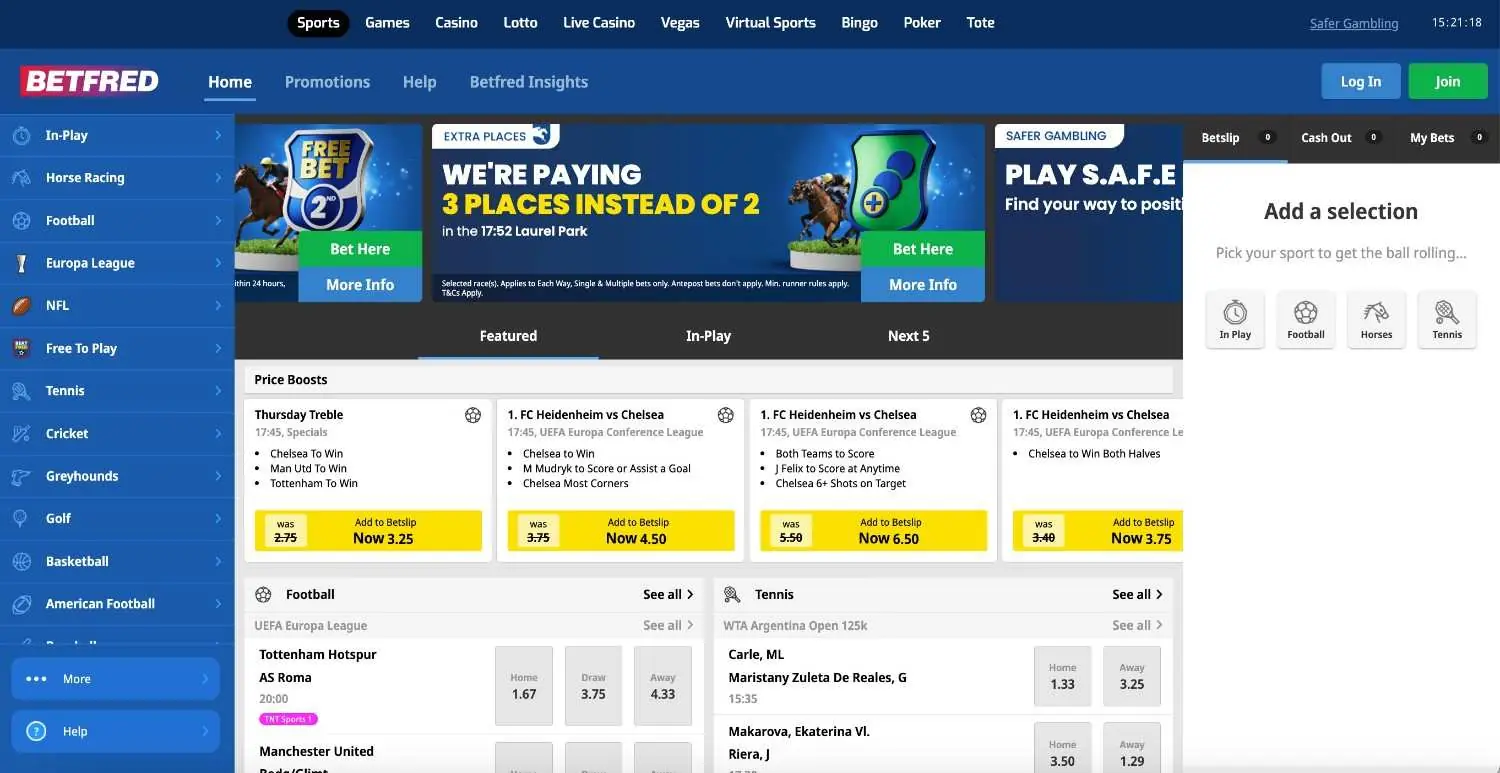
Betfred brings something no other casino on this list can match: over 57 years of UK gambling heritage. Operated by Petfre (Gibraltar) Ltd under UKGC licence 39544, Betfred has operated continuously since 1967 with more than 1,300 betting shops nationwide. The transition of its no-wagering bonus philosophy to the online casino division makes it the most established brand among UK no wagering casinos.
The welcome offer presents an unusual degree of choice. New players deposit and stake £10 on slots, then select from three packages: 50 free spins at £0.20 each on Age of the Gods, 100 free spins at £0.10 each on Better Wilds, or 200 free spins at £0.05 each on Age of the Gods: God of Storms 2. All three options total £10 in spin value and carry zero wagering on winnings. Spins are credited within 48 hours and expire after 7 days. The critical caveat is that deposits must be made via debit card — PayPal, Skrill, Neteller, and other e-wallets do not qualify for the welcome offer.
Beyond the welcome deal, Betfred operates a Weekly Free Spins Accumulator awarding up to 200 spins for qualifying slot play, daily Mystery Free Spins (10-100 spins with no wagering), and Game of the Week promotions — all carrying zero playthrough. This consistency separates Betfred from casinos like Paddy Power or Coral, where promotional wagering terms can vary from deal to deal.
The game library spans approximately 1,500 titles powered primarily by Playtech alongside NetEnt, IGT, Blueprint, and Pragmatic Play. Live casino tables are provided by Evolution Gaming and Playtech, covering blackjack, roulette, baccarat, and game shows including Crazy Time and Monopoly Live. Casino Guru awards Betfred a Very High Safety Index of 9.8, with no unfair T&C clauses flagged. Fund segregation sits at Basic level rather than Medium or High, meaning player funds are held in company accounts — a point worth noting despite decades of uninterrupted payment processing.
Betfred Casino Dossier
| Metric | Details |
|---|---|
| Operator | Petfre (Gibraltar) Ltd, UKGC licence 39544 |
| No Wagering Rating | 0x on welcome spins plus all ongoing promotions |
| Key Strength | 57-year UK brand with Casino Guru 9.8 Safety Index |
| Game Library | 1,500+ games from Playtech, NetEnt, IGT, Blueprint, Pragmatic Play |
| Bonus Highlight | Player's choice of spin package — 50, 100, or 200 spins at varying values |
| The Catch | E-wallets excluded from welcome offer; Basic fund segregation level |
| Best Suited For | Players who value established trust and flexible welcome bonus structure |
BetMGM — No Wagering Casino with Exclusive Game Content
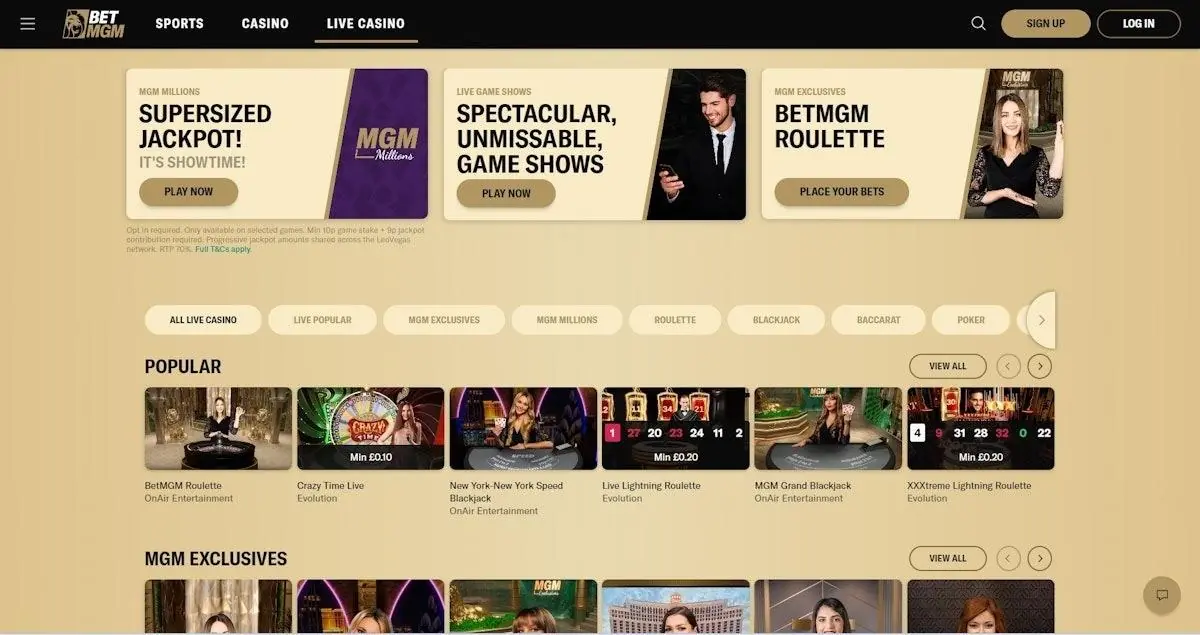
BetMGM entered the UK market in 2023 and immediately adopted a no-wagering approach to its free spin promotions, positioning itself as a premium alternative within the best no wagering casinos segment. Operated by LeoVegas Gaming PLC under an active UKGC licence held since November 2014, BetMGM brings the MGM brand's Las Vegas heritage to a regulated UK audience.
The welcome offer awards 200 free spins on Big Bass Splash after depositing £10 and wagering that amount 1x on casino games within seven days. Each spin is worth £0.10, and winnings from the free spins carry no wagering requirements whatsoever — cash credits go directly to the withdrawable balance. Spins expire three days after being credited, which is tighter than the seven-day window offered by most competitors. Ongoing promotions include the BetMGM Spin&Win reward (triggered every 200 spins on any game) and daily prize wheel spins with cash prizes up to £5,000.
Where BetMGM separates itself is exclusive content. The casino offers approximately 20 BetMGM-branded games, including BetMGM Bonanza, Speed Crash BetMGM, and Mysteries of Luxor, alongside 107 titles connected to the BetMGM Millions Progressive Jackpot. The broader library reaches approximately 2,000 games from Pragmatic Play, NetEnt, Evolution Gaming, and other tier-one providers. Live dealer tables cover the standard range with particular strength in blackjack and roulette.
Trustpilot data for BetMGM UK specifically is limited due to the brand's relative newness, with mixed global reviews (approximately 1.2 out of 5 on the global Trustpilot page, though this combines US and international feedback which skews heavily negative due to market-specific issues). Casino Guru has not yet assigned a standalone Safety Index for BetMGM UK, though the parent operator LeoVegas Gaming PLC has no recorded UKGC enforcement actions. Payment options include Visa, Mastercard, Apple Pay, and PayPal is not currently supported for BetMGM UK, with e-wallet withdrawals typically processed within hours and card withdrawals taking up to 48 hours.
BetMGM Dossier
| Metric | Details |
|---|---|
| Operator | LeoVegas Gaming PLC, UKGC licensed since November 2014 |
| No Wagering Rating | 0x on all free spin winnings; 1x deposit wager required to unlock spins |
| Key Strength | 20+ exclusive BetMGM games and BetMGM Millions Progressive Jackpot |
| Game Library | 2,000+ games from Pragmatic Play, NetEnt, Evolution, plus BetMGM exclusives |
| Bonus Highlight | 200 wager-free spins with no win cap |
| The Catch | Three-day spin expiry is shorter than competitors; limited UK Trustpilot data |
| Best Suited For | Players seeking exclusive game content alongside wager-free bonuses |
Sky Vegas — Most Generous No Wagering Casino for New Players
Sky Vegas offers what no other major no wagering casino currently matches: genuine no-deposit, no-wagering free spins simply for registering an account. Operated by Bonne Terre Gaming Ltd (part of Flutter Entertainment) under UKGC licence 38718, Sky Vegas leverages one of the most recognisable media brands in the UK to deliver a premium slots-focused experience.
The welcome package works in two stages. First, new customers receive 50 free spins with no deposit required and no wagering on winnings — register, add a card, opt in, and spins are credited within 72 hours. Second, depositing and staking £10 on eligible slots unlocks a further 200 free spins, also wager-free. Both batches allow players to choose spin value: 10p default or higher values with proportionally fewer spins. Free spins bind to the first eligible game loaded, meaning players should choose carefully. All winnings from both stages are paid as withdrawable cash. The daily Prize Machine supplements the welcome deal with free daily spins offering cash prizes, free spins, and bonuses — all without wagering requirements. Players already within the Flutter network can review Sky Vegas sister brands to understand how the shared account structure affects eligibility across Sky-branded casinos.
Sky Vegas does not currently support PayPal, Skrill, or Neteller. Payment is limited to debit cards, Apple Pay, and Pay by Bank. For players accustomed to the speed and convenience of e-wallets, this restriction matters. Pay by Bank withdrawals process almost instantly, while debit card cashouts take 2-5 business days. Unibet and 888casino both offer broader payment support, which may influence players for whom payment flexibility is a priority.
The game library exceeds 1,200 titles from Playtech, Blueprint Gaming, NetEnt, Big Time Gaming, and Pragmatic Play, with particular strength in Jackpot King progressive jackpots and exclusive Sky-branded tables. Casino Guru rates Sky Vegas at 9.4 Safety Index (Very High), reflecting strong regulatory compliance across the broader Flutter group. Trustpilot sits at 3.1 out of 5 from approximately 3,700 reviews (April 2026), with common complaints centring on perceived low payout rates rather than withdrawal refusal or bonus term disputes.
Sky Vegas Dossier
| Metric | Details |
|---|---|
| Operator | Bonne Terre Gaming Ltd (Flutter Entertainment), UKGC licence 38718 |
| No Wagering Rating | 0x on all welcome spins and ongoing Prize Machine rewards |
| Key Strength | 50 genuine no-deposit, no-wagering spins — unmatched by competitors |
| Game Library | 1,200+ games from Playtech, Blueprint, NetEnt, BTG, Pragmatic Play |
| Bonus Highlight | 250 total wager-free spins with 50 requiring zero financial commitment |
| The Catch | No PayPal, Skrill, or Neteller; limited table game selection |
| Best Suited For | New players wanting a zero-risk trial of no wagering casino sites |
No Wagering Bonuses Explained: What Matters and Why
A wagering requirement is the multiplier determining how many times bonus funds or free spin winnings must be bet before they become withdrawable cash. A £10 bonus with 30x wagering would require £300 in total stakes before a single penny could be withdrawn — and with house edges working against the player throughout that cycle, the statistical likelihood of retaining meaningful winnings is low.
No wagering casinos eliminate this cycle entirely. When a player wins £50 from wager-free free spins, that £50 sits in their real cash balance immediately. No playthrough, no minimum bet thresholds, no game contribution weightings, no time pressure to clear a rollover target. The shift fundamentally changes the value proposition of casino bonuses from a marketing tool that statistically favours the house to a genuine incentive that can translate into real returns.
The UKGC's January 2026 regulatory change capping wagering at 10x across all licensed operators accelerated this trend. Many operators concluded that implementing and policing a 10x cap across complex bonus structures was more costly than simply removing wagering altogether. This is why the number of no wagering casino sites in the UK has grown sharply through early 2026 — though the depth of commitment varies. Some casinos apply zero wagering only to welcome offers while retaining requirements on loyalty rewards or reload bonuses. The five casinos profiled in this guide were selected partly because their no-wagering policies are either universal or clearly defined across the full promotional calendar.
Players should also watch for quasi-wagering conditions that achieve the same effect without technically being called wagering requirements. Win caps that limit withdrawals from bonus play, game restrictions that exclude high-RTP titles from bonus eligibility, and short expiry windows that force rushed play all reduce the real-world value of an apparently wager-free bonus. Always read the full terms on each specific promotion.
Safety, Licensing, and Regulatory Standing
All five profiled casinos hold active UK Gambling Commission licences, which since January 2026 mandate a 10x maximum wagering cap, £5 online slot stake limits (£2 for under-25s subject to affordability checks), enhanced customer interaction requirements, and full GamStop registration. SSL encryption is standard across all five sites. KYC verification — typically requiring photo ID and proof of address — must be completed before any first withdrawal under UKGC rules.
| Casino | Licence Body | UKGC Licence No. | Operator | Self-Exclusion | RNG Auditor |
|---|---|---|---|---|---|
| PlayOJO | UKGC + MGA | 39326 | Skill On Net Ltd | GamStop registered | iTech Labs |
| MrQ | UKGC | 51250 | Lindar Media Ltd | GamStop registered | eCOGRA |
| Betfred Casino | UKGC + Gibraltar | 39544 | Petfre (Gibraltar) Ltd | GamStop registered | GLI |
| BetMGM | UKGC | LeoVegas Gaming PLC licence | LeoVegas Gaming PLC | GamStop registered | eCOGRA |
| Sky Vegas | UKGC + Alderney | 38718 | Bonne Terre Gaming Ltd | GamStop registered | eCOGRA |
Regulatory disclosures: Skill On Net Ltd (PlayOJO) received a UKGC settlement of approximately £300,000 in May 2023 for anti-money laundering and safer gambling failings. Lindar Media Ltd (MrQ) made a regulatory payment of £690,947 between 2021-2022 relating to money laundering prevention protocols. No recorded UKGC enforcement actions exist against Petfre (Gibraltar) Ltd, LeoVegas Gaming PLC, or Bonne Terre Gaming Ltd at the time of writing.
Bonus and Wagering Breakdown
| Casino | Welcome Bonus | Wagering Requirement | Min Deposit | Max Bet | Win Cap | Expiry |
|---|---|---|---|---|---|---|
| PlayOJO | 80 Free Spins on Big Bass Bonanza | 0x | £10 | N/A | No cap | 7 days |
| MrQ | Up to 200 Free Spins on Fishin' BIGGER Pots of Gold | 0x | £10/day | N/A | No cap | 48 hours per batch |
| Betfred Casino | Up to 200 Free Spins (player's choice of game) | 0x | £10 stake | N/A | No cap | 7 days |
| BetMGM | 200 Free Spins on Big Bass Splash | 0x on winnings (1x deposit wager to unlock) | £10 | N/A | No cap | 3 days |
| Sky Vegas | 50 No-Deposit Spins + 200 Deposit Spins | 0x | £0 (first stage), £10 (second stage) | N/A | No cap | 7 days |
To illustrate the real-world value: Sky Vegas's combined 250 spins at £0.10 each represent £25 in total spin value. Assuming a conservative 25% hit rate and an average 3x multiplier on winning spins, expected returns sit around £18.75 — all of which is immediately withdrawable cash with no playthrough hurdle. By comparison, the same £25 in free spins at a casino with even the new 10x wagering cap would require £187.50 in additional wagering before any withdrawal, during which house edge erosion would significantly reduce the final cashable amount.
Payment Methods Across No Wagering Casinos
| Casino | Visa | Mastercard | PayPal | Apple Pay | Skrill | Neteller | Bank Transfer | Pay by Bank |
|---|---|---|---|---|---|---|---|---|
| PlayOJO | Yes | Yes | Yes | Yes | Yes | No | No | Yes (Trustly) |
| MrQ | Yes | Yes | Yes | Yes | No | No | Yes | Yes |
| Betfred Casino | Yes | Yes | Yes | No | Yes | Yes | Yes | No |
| BetMGM | Yes | Yes | No | Yes | No | No | No | No |
| Sky Vegas | Yes | No | No | Yes | No | No | No | Yes |
For players at no wagering casinos, withdrawal speed matters more than at wagered sites because winnings are immediately cashable. PayPal and Pay by Bank consistently offer the fastest processing across these casinos. Betfred provides the broadest payment selection, while Sky Vegas runs the most restricted set. Players who rely on PayPal should note that neither BetMGM nor Sky Vegas currently support it.
Game Providers and Library Depth
| Casino | Top 5 Providers | Approx. Game Count | Live Dealer Available |
|---|---|---|---|
| PlayOJO | NetEnt, Pragmatic Play, Evolution, Play'n GO, BTG | 3,000+ | Yes (260+ tables) |
| MrQ | NetEnt, Pragmatic Play, Quickspin, No Limit City, ELK Studios | 1,000+ | Yes (50+ tables) |
| Betfred Casino | Playtech, NetEnt, IGT, Blueprint, Pragmatic Play | 1,500+ | Yes (extensive) |
| BetMGM | Pragmatic Play, NetEnt, Evolution, Playtech, BTG | 2,000+ | Yes |
| Sky Vegas | Playtech, Blueprint, NetEnt, BTG, Pragmatic Play | 1,200+ | Yes |
PlayOJO leads on overall library size and live dealer coverage, making it the strongest choice for players who want no-wagering bonuses alongside maximum game variety. MrQ compensates for its smaller library by offering highest-available RTP versions of its slots — a meaningful advantage that directly affects long-term player returns and is underpinned by eCOGRA certification of game fairness. Betfred's Playtech-heavy catalogue includes the Age of the Gods progressive jackpot network, while BetMGM's exclusive branded titles provide content unavailable elsewhere.
What Players Report: Real Feedback on No Wagering Casinos
| Source | What Players Praise | What Players Criticise |
|---|---|---|
| Trustpilot (MrQ, 14,800+ reviews, April 2026) | Instant withdrawal processing, transparent bonus terms, high-RTP slots | Limited live chat hours, smaller game library than large operators |
| Trustpilot (PlayOJO, 14,000+ reviews, April 2026) | No-wagering philosophy, OJOplus cashback system, game variety | Verification delays, mixed withdrawal experiences outside PayPal |
| Trustpilot (Sky Vegas, 3,700+ reviews, April 2026) | No-deposit free spins, Prize Machine daily rewards, brand trust | Perceived low payout frequency, limited payment methods |
| Casino Guru (Betfred, Safety Index 9.8/10) | Clean T&Cs with no unfair clauses, no-wagering on all promotions | Basic fund segregation level rather than Medium or High |
| Casino Guru (MrQ, Safety Index 6.9/10) | No blacklist appearances, consistent no-wagering across all offers | Regulatory payment history, somewhat unfair T&C clauses noted |
The clearest pattern across player feedback is that no-wagering policies significantly reduce bonus-related complaints. Sites like MrQ and PlayOJO receive far fewer disputes about withheld winnings or confusing playthrough requirements compared to wagered competitors. The complaints that do surface tend to focus on KYC processing times and payment method limitations rather than bonus term disputes.
Common No Wagering Casino Problems and How to Avoid Them
The most frequent issue reported across Trustpilot and Reddit for no wagering casino sites is misunderstanding the distinction between a no-wagering welcome bonus and a fully wager-free platform. Some casinos advertise a no-wagering welcome offer while attaching standard playthrough requirements to reload bonuses, cashback rewards, or loyalty credits. Before committing to any site, check whether the zero-wagering policy applies universally or only to the initial promotion.
Spin expiry windows catch players off guard regularly. BetMGM's three-day expiry on its 200 free spins is tighter than most competitors, and failing to use spins within the window means forfeiting them entirely — regardless of the no-wagering terms. MrQ's 48-hour expiry per batch requires daily engagement over four consecutive days to claim the full allocation. Setting a calendar reminder for each batch prevents wasted spins.
Payment method exclusions present another pitfall. Both Betfred and Sky Vegas exclude certain payment methods from welcome offer eligibility. Depositing via an e-wallet at Betfred, for example, voids the entire welcome bonus. Always check which deposit methods qualify before funding a new account. KYC verification delays are the third common issue. Every UKGC casino requires identity verification before processing a first withdrawal. Uploading documents — passport or driving licence plus a recent utility bill or bank statement — immediately after registration rather than after a win eliminates the frustrating wait that generates the majority of negative Trustpilot reviews.
Choosing the Right No Wagering Casino for You
The right choice depends entirely on what matters most to your playing style. PlayOJO suits players who want the most comprehensive no-wagering ecosystem — every bonus, every cashback credit, every loyalty reward carries zero playthrough, and the 3,000-game library ensures no compromise on variety. For players who value withdrawal speed above all else, MrQ's 60-second cashout guarantee backed by a £10 penalty payment is unmatched, though the smaller game library and limited live casino may not satisfy table game enthusiasts.
Betfred is the natural pick for players who want the reassurance of an established high-street brand with a 9.8 Casino Guru Safety Index and the flexibility to choose their own welcome spin package. BetMGM appeals to players drawn to exclusive game content and the MGM brand's premium aesthetic, provided they can work within the tighter three-day spin expiry. Sky Vegas stands alone for players who want to test a no wagering casino with absolutely zero financial commitment — the 50 no-deposit, wager-free spins represent the closest thing to a genuinely free trial in the UK market.
Players primarily interested in live dealer gaming should consider that Casumo and 32Red both offer broader live casino suites, though their wagering terms differ, while Gala Spins casino alternatives within the Entain group provide varied promotional approaches. Players who need Skrill or Neteller support will find Betfred the only option among these five that accepts both.
Final Assessment: Best No Wagering Casinos for UK Players
PlayOJO earns the top position for its universal no-wagering philosophy, deep game library, and the OJOplus cashback system that returns real cash on every wager. It is the most complete no wagering casino in the UK, despite Trustpilot scores that lag behind MrQ. The runner-up depends on priorities: MrQ takes second for pure speed and transparency, while Betfred earns it for trust, safety scores, and flexible bonus structure.
Sky Vegas deserves particular recognition for the no-deposit, no-wagering entry point that lets players evaluate the casino at zero cost. BetMGM rounds out the field as a premium option with exclusive content, though its tighter expiry windows and limited payment methods prevent it from challenging the top two positions.
Whichever no wagering casino site you choose, complete your KYC verification immediately after registration to ensure frictionless withdrawals when your wager-free winnings hit the cash balance. For ongoing value, prioritise casinos where the no-wagering policy extends beyond the welcome offer to encompass the full promotional calendar — a one-time wager-free deal followed by 10x requirements on every subsequent bonus delivers far less long-term value than a universally wager-free platform.