








| Detail | Info |
|---|---|
| Full Legal Name | White Hat Gaming Limited |
| Parent Company | Independent (associated with Caddell Limited N.V.) |
| Founded | 2012 |
| Headquarters | Cornerstone Business Centre, Mosta MST 1180, Malta |
| Primary Licence(s) | UKGC (52894), MGA (MGA/B2C/370/2017 & MGA/B2B/1004/2023) |
| Active Casino Brands | 20+ (UK-facing) |
| Platform Provider | Proprietary (White Hat Gaming PAM) |
| Casino Guru Avg. Safety Index | 5.0–9.2 (significant variation across brands) |
White Hat Gaming occupies an unusual dual position as both a direct casino operator and a B2B platform provider powering third-party white-label sites. This makes it comparable in scale to networks like Skill on Net Ltd casinos, though White Hat leans more heavily toward thematic differentiation between brands. The sheer variance in Casino Guru Safety Index scores, from 9.2 at the top to below 5.0 at the bottom, signals that not all White Hat Gaming casinos deliver the same experience despite identical backend infrastructure.
White Hat Gaming Limited was established in 2012 by Maxwell George Wright, a mathematics graduate from the University of Edinburgh who had previously operated a Microgaming-powered casino brand before selling it in 2011. The company was incorporated in Malta under company number C73232 and initially traded through Caddell Limited N.V.
The operator secured its Malta Gaming Authority licence in 2018 (MGA/B2C/370/2017) and obtained its UK Gambling Commission licence (number 52894) the same year. Early UK brands included 21 Casino (launched around 2015), The Grand Ivy (2016), and Miami Dice (2016), followed by rapid expansion bringing Casimba, Casilando, and others online in 2017. Between 2018 and 2020, the network added Dream Vegas, Playzee, Jonny Jackpot, SpinStation, Captain Spins, CasiGo, Griffon, and more. In 2021, White Hat Studios was created through acquiring a Remote Gaming Server and game catalogue from Blueprint Gaming, entering the US iCasino content market.
The most significant regulatory event came in January 2021, when the UKGC announced a £1.3 million settlement following investigation into seven customer accounts across The Grand Ivy, 21 Casino, Hello Casino, and Dream Vegas. The regulator found inadequate AML and social responsibility procedures between October 2016 and March 2019, including three cases where customers lost £70,000, £50,000, and £85,000 respectively without adequate intervention. White Hat Gaming cooperated fully and committed to improvement programmes. No further sanctions have been recorded since.
More recently, SpinYoo launched in 2021, Casiku in late 2024, and 247Bet in August 2025, demonstrating continued expansion into 2026. The company also holds US state licences in New Jersey, Pennsylvania, Michigan, and Ontario.
| Brand | Launch Year | Welcome Bonus | Payout Speed (E-Wallets) | Casino Guru Safety Index | Our Rating |
|---|---|---|---|---|---|
| 21 Casino | ~2015 | 100% up to £100 + 50 free spins (35x WR) | 24–48 hours | 9.2 (Very High) | 8/10 |
| Casilando | 2017 | 70 cash spins on Book of Dead (no wagering) | 24–48 hours | 9.0 (Very High) | 8/10 |
| SpinYoo | 2021 | 100% up to £250 + 100 Yoo Spins (35x WR) | 24–48 hours | 7.0 (Above Average) | 7.5/10 |
| Casiku | 2024 | 100% up to £247 + 100 spins (25x WR) | 24–48 hours | Not yet rated | 7/10 |
| Griffon | 2020 | 300 free spins across 3 deposits (no WR) | 24–48 hours | 6.8 (Above Average) | 7/10 |
| CasiGo | 2020 | Up to £1,100 across 4 deposits (35x WR) | 24–48 hours | 6.5 (est.) | 6.5/10 |
| Dream Vegas | 2018 | 100% up to £300 + 50 spins (40x WR) | 24–48 hours | 6.3 (Below Average) | 6.5/10 |
| The Grand Ivy | 2016 | 100% up to £300 + 25 spins (40x WR) | 24–48 hours | 6.2 (Below Average) | 6.5/10 |
| PlayGrand | 2018 | Up to £1,000 + spins (35x WR) | 24–48 hours | 6.5 (est.) | 6.5/10 |
| Playzee | 2018 | 100% up to £300 + spins (35x WR) | 24–48 hours | 5.7 (Below Average) | 6/10 |
| Barz | 2022 | 100% up to £300 + 50 spins (40x WR) | 24–48 hours | 6.0 (est.) | 6/10 |
| Slotnite | 2019 | 100% up to £100 + 100 spins (40x WR) | 24–48 hours | 6.0 (est.) | 6/10 |
| Captain Spins | 2019 | Bonus spins package (35x WR) | 24–48 hours | 6.0 (est.) | 6/10 |
| Jonny Jackpot | 2018 | 100% up to £200 + spins (35x WR) | 24–48 hours | 6.0 (est.) | 6/10 |
| Miami Dice | 2016 | 100% up to £200 + spins (35x WR) | 24–48 hours | 5.5 (est.) | 5.5/10 |
| SpinStation | 2017 | 100% up to £200 + spins (35x WR) | 24–48 hours | 5.5 (est.) | 5.5/10 |
| SpinRider | 2017 | 100% up to £200 + spins (35x WR) | 24–48 hours | 5.5 (est.) | 5.5/10 |
| Spinland | 2016 | 100% up to £200 + spins (35x WR) | 24–48 hours | 5.5 (est.) | 5.5/10 |
| Temple Nile | 2018 | 100% up to £200 + spins (35x WR) | 24–48 hours | 5.5 (est.) | 5.5/10 |
| Casimba | 2017 | 100% up to £200 + spins (35x WR) | 24–48 hours | 4.7 (Below Average) | 5.5/10 |
| 247Bet | 2025 | Sports and casino welcome offer | 24–48 hours | Not yet rated | 6.5/10 |
Every brand listed operates under White Hat Gaming Limited’s UKGC licence. Bonuses are subject to change — always verify the latest terms directly on each casino’s website before depositing.

21 Casino was among the first brands on the White Hat Gaming platform, arriving around 2015 and establishing itself as the network’s most respected property. The dark-themed design built around a classic card-game aesthetic appeals to players seeking a refined experience. Licensed under UKGC 52894 and MGA, the game library runs past 2,000 slots from NetEnt, Play’n GO, Pragmatic Play, Microgaming, Big Time Gaming, and dozens more, with Evolution powering the live casino.
The welcome offer is 100% up to £100 plus 50 bonus spins at 35x wagering on the combined bonus and deposit, with a £5 max bet and 30-day expiry. The minimum deposit is £20. While the headline amount is modest, the terms are straightforward. Casino Guru awarded 21 Casino a Safety Index of 9.2, the highest in the network, finding no unfair T&C clauses and very low complaint volumes. User reviews rate it “Great,” which is unusual for a white-label brand. The loyalty programme uses comp points convertible to bonus credits, though it lacks the gamified layers found at SpinYoo.
Banking includes Visa, Mastercard, PayPal, Skrill, Neteller, Paysafecard, Trustly, and Apple Pay. The £20 minimum withdrawal is higher than the £10 standard at many UK online casinos, and weekend processing is unavailable.
| Metric | Details |
|---|---|
| Site Identity | Dark, card-game aesthetic with a premium, understated feel |
| Standout Mechanic | Fairest T&Cs in the White Hat Gaming network (Casino Guru 9.2 Safety Index) |
| Game Edge | 2,000+ slots from 100+ providers including NetEnt, Play’n GO, Pragmatic Play |
| Best Bonus Feature | 35x wagering on 100% match with non-sticky bonus structure |
| The Trade-Off | £20 minimum deposit and withdrawal higher than competitors |
| Best For | Players who prioritise fair terms and T&C transparency over flashy bonus amounts |
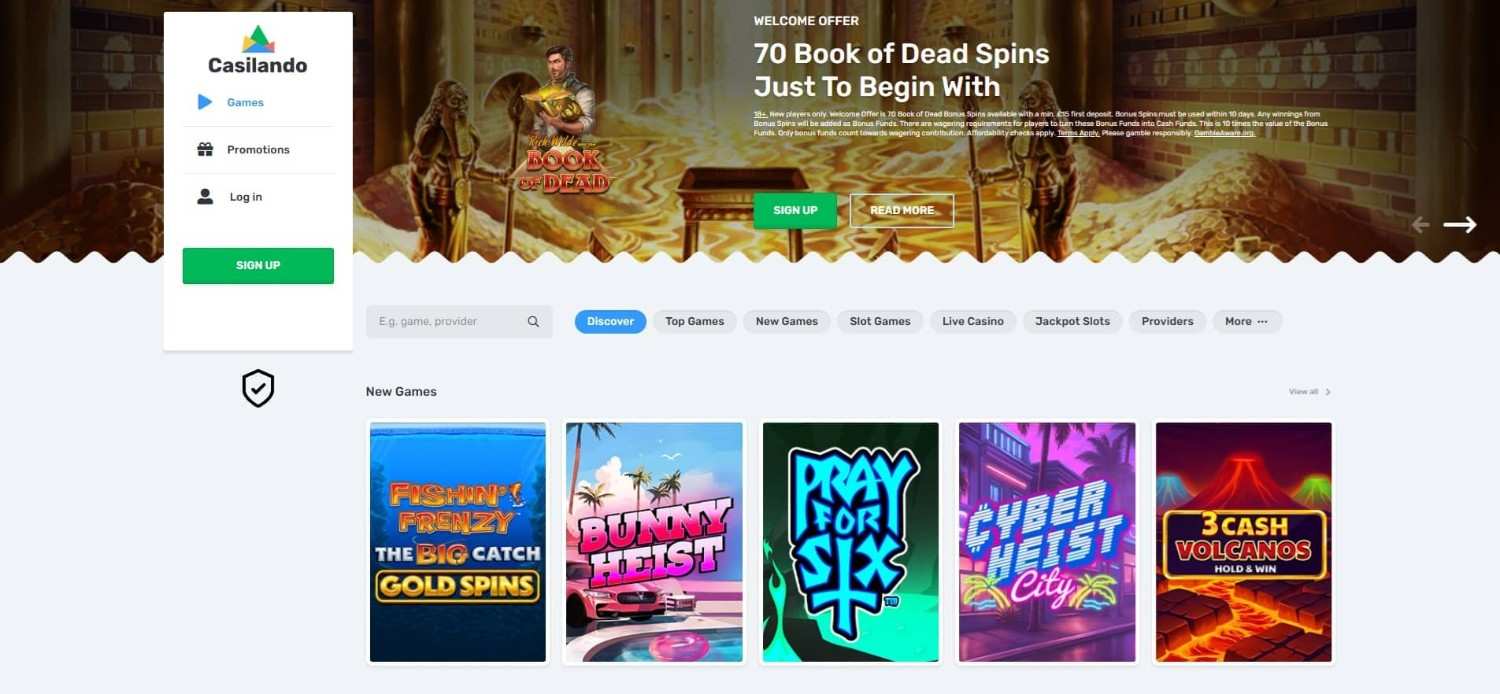
Casilando launched in 2017 with a clean, Mediterranean-styled design and has built a quietly excellent reputation. Licensed under UKGC 52894 and MGA, the game library features over 1,200 slots and 200 live dealer games from approximately 135 providers.
The welcome offer is genuinely distinctive: 70 cash spins on Book of Dead with zero wagering requirements. Winnings are credited as cash, immediately withdrawable up to £100. This no-wagering structure contrasts sharply with the 35x–40x requirements at most other White Hat Gaming brands and rivals the approach at brands like PlayOJO sister sites.
Casino Guru rates Casilando at 9.0, “Very High,” with no unfair T&C clauses and minimal complaints. However, Trustpilot reviews present a less favourable picture at 1.5/5 from 44 reviews, with complaints about account closures and verification delays — a recurring theme across White Hat Gaming brands on that platform. Payment methods include all standard UK options with no transaction fees and unlimited withdrawal limits reported.
| Metric | Details |
|---|---|
| Site Identity | Clean Mediterranean design, function-over-form layout |
| Standout Mechanic | No-wagering welcome spins with cash winnings |
| Game Edge | 1,200+ slots and 200 live games from 135+ providers |
| Best Bonus Feature | 70 cash spins, zero wagering, winnings capped at £100 |
| The Trade-Off | Smaller game library than network siblings |
| Best For | Bonus-savvy players who want value without wagering hoops |
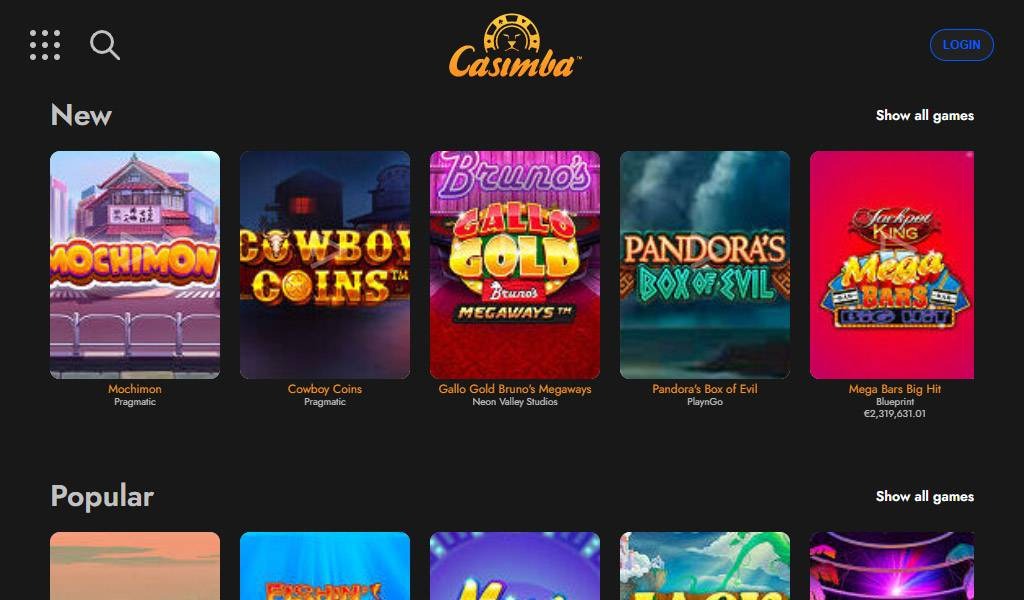
Casimba arrived in 2017 with a safari-inspired theme and heavy marketing that made it one of the most visible White Hat Gaming casino brands. Licensed under UKGC 52894, it offers over 2,500 games from approximately 79 providers including NetEnt, Microgaming, Play’n GO, and Blueprint, with progressive jackpots like Mega Moolah available.
The welcome bonus is 100% up to £200 plus free spins at 35x wagering. The minimum deposit is £10, notably lower than the £20 standard at most network siblings. Casimba also operates a comp point loyalty scheme.
The significant concern is Casimba’s Casino Guru Safety Index of 4.7, classified “Below Average,” with flagged T&C issues and 9 direct complaints plus 50 related complaints generating 7,288 black points. On Trustpilot, complaints about delayed withdrawals, KYC friction, and accounts locked after withdrawal requests are common. Some players report multi-month waits for payouts. The weekly withdrawal cap is £5,000.
| Metric | Details |
|---|---|
| Site Identity | Safari-themed with African wildlife branding |
| Standout Mechanic | Largest game library breadth in the network (2,500+) |
| Game Edge | 79+ providers with progressive jackpot network access |
| Best Bonus Feature | £10 minimum deposit — lowest entry point in the network |
| The Trade-Off | Casino Guru Safety Index of 4.7 with significant complaint volumes |
| Best For | Players who prioritise game variety and jackpot access over withdrawal speed |

The Grand Ivy launched in 2016 with a luxury hotel, art deco aesthetic that positions it as the network’s premium option. Licensed under UKGC 52894, it offers 2,500+ games with a particularly strong live casino section featuring high-stakes blackjack, roulette, and Evolution game shows.
The welcome offer is 100% up to £300 plus 25 bonus spins at 40x wagering. The VIP programme is the most developed in the White Hat Gaming network, with tiered rewards, personalised offers, and dedicated account management for higher-volume players, approaching what established operators like BetVictor sister sites offer their loyal customers.
Casino Guru assigns a Safety Index of 6.2, “Below Average,” and user feedback is rated “Bad” from 19 reviews. The Grand Ivy was named in the 2021 UKGC enforcement action, though failings related to 2016–2019 and improvements have been implemented.
| Metric | Details |
|---|---|
| Site Identity | Art deco luxury hotel theme with premium atmosphere |
| Standout Mechanic | Strongest VIP programme in the White Hat Gaming network |
| Game Edge | 2,500+ games with strength in live casino and high-stakes tables |
| Best Bonus Feature | £300 match ceiling — highest single-deposit offer in the network |
| The Trade-Off | 40x wagering and Below Average Safety Index |
| Best For | VIP-oriented players who value loyalty programmes and premium presentation |
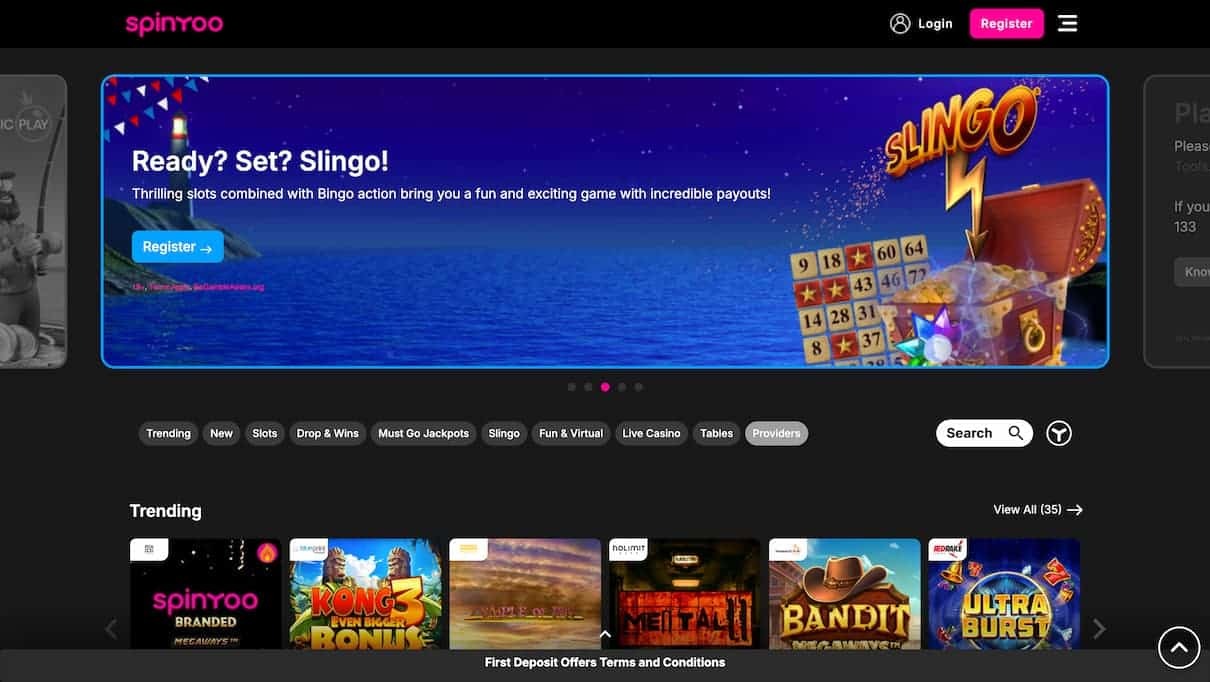
SpinYoo launched in 2021 and differentiated itself through gamified, reward-heavy design. The bright, energetic aesthetic features daily challenges, personalised promotions, and a “Yoo Spin” mechanic. Licensed under UKGC 52894, it provides 2,400+ games from 100+ providers, with live casino from both Evolution and Playtech.
The welcome offer is 100% up to £250 plus 100 Yoo Spins at 35x wagering on bonus amount. Spins release at 20 per day on titles including Starburst, Book of Dead, and Big Bass Bonanza. Casino Guru awards a Safety Index of 7.0, “Above Average,” the third-highest among individually rated White Hat Gaming brands. Independent testing reported same-day withdrawal processing with sub-4-hour payouts in best cases.
| Metric | Details |
|---|---|
| Site Identity | Bright, gamified design with daily challenges and rewards |
| Standout Mechanic | Yoo Spin system with daily release and personalised engagement loop |
| Game Edge | 2,400+ slots from 100+ providers with dual live casino providers |
| Best Bonus Feature | 35x wagering with table-game or slots welcome offer choice |
| The Trade-Off | Spin winnings capped per batch and credited as bonus funds |
| Best For | Players who enjoy gamification, daily challenges, and interactive rewards |
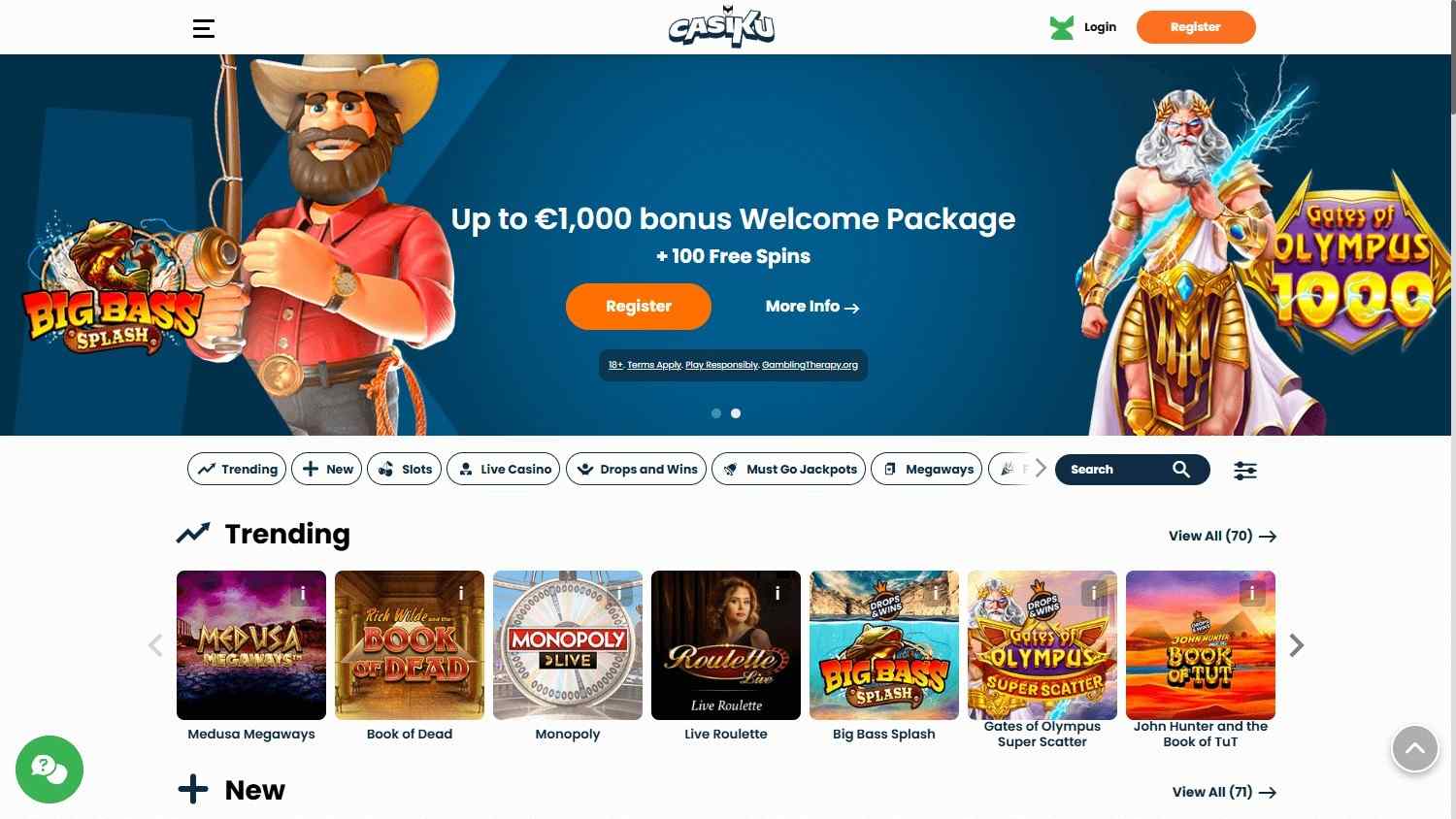
Casiku launched in November 2024 as one of the freshest brands in the network. Licensed under UKGC 52894, it offers 3,000+ games from NetEnt, Pragmatic Play, Play’n GO, Microgaming, and Evolution, covering slots, jackpots, live casino, and Slingo.
The welcome offer is 100% up to £247 plus 100 free spins and a scratchcard at 25x wagering, the lowest requirement across any White Hat Gaming brand. Free spin winnings are capped at £100 credited as cash. As a late-2024 launch, Casiku does not yet have a Casino Guru Safety Index, though early reviews are positive based on the lower wagering terms and clean design.
| Metric | Details |
|---|---|
| Site Identity | Modern, sleek design with clean contemporary aesthetic |
| Standout Mechanic | 25x wagering — lowest in the entire White Hat Gaming network |
| Game Edge | 3,000+ games including Slingo and scratchcards |
| Best Bonus Feature | £247 match + 100 spins + scratchcard at 25x WR |
| The Trade-Off | Too new for established reputation data |
| Best For | New players seeking the best wagering terms from a White Hat Gaming brand |
The most striking finding across the White Hat Gaming casino network is how dramatically quality varies despite identical backend infrastructure. 21 Casino and Casilando earn Casino Guru scores above 9.0 with fair T&Cs, while Casimba scores below 5.0 with significant complaints. This gap is wider than typical for a single UKGC operator.
For bonus value, Casilando’s no-wagering spins and Casiku’s 25x requirement stand out. Most brands cluster at 35x–40x. Game library breadth is consistently strong, with even smaller-catalogue brands offering 1,200+ titles and Dream Vegas pushing past 3,000. Live casino is uniformly anchored by Evolution. Withdrawal speeds are the network’s most inconsistent metric — SpinYoo delivers same-day in testing, while lower-rated properties draw multi-week complaints. The £20 minimum withdrawal and absence of weekend processing are universal limitations. No brand offers native apps, relying on responsive browser access, which puts the network behind operators like Entain Operations Limited casinos that provide downloadable experiences.
| Payment Method | Min Deposit | Max Deposit | Withdrawal Time | Available At |
|---|---|---|---|---|
| Visa Debit | £10–£20 | £5,000 | 3–5 working days | All brands |
| Mastercard | £10–£20 | £5,000 | 3–5 working days | All brands |
| PayPal | £10–£20 | £5,000 | 24–48 hours | Most brands |
| Skrill | £10–£20 | £5,000 | 24–48 hours | All brands |
| Neteller | £10–£20 | £5,000 | 24–48 hours | All brands |
| Paysafecard | £10–£20 | £1,000 | N/A (deposit only) | All brands |
| Trustly | £10–£20 | £5,000 | 24–48 hours | Most brands |
| Apple Pay | £10–£20 | £5,000 | 24–48 hours | Most brands |
| Bank Transfer | £10–£20 | £10,000+ | 3–7 working days | All brands |
PayPal and Visa debit offer the best combination for UK players. Skrill casinos across the network generally process faster than card withdrawals. No White Hat Gaming brands accept cryptocurrency, and no brand processes withdrawals over weekends.
| Brand | Top 5 Providers | Approx. Game Count | Live Dealer Available |
|---|---|---|---|
| 21 Casino | NetEnt, Play’n GO, Pragmatic Play, Microgaming, BTG | 2,000+ | Yes (Evolution) |
| Casilando | Play’n GO, NetEnt, Microgaming, Pragmatic Play, Red Tiger | 1,200+ | Yes (Evolution) |
| Casimba | NetEnt, Microgaming, Play’n GO, Blueprint, Red Tiger | 2,500+ | Yes (Evolution) |
| The Grand Ivy | NetEnt, Play’n GO, Microgaming, Red Tiger, Evolution | 2,500+ | Yes (Evolution) |
| Dream Vegas | Pragmatic Play, NetEnt, Play’n GO, Nolimit City, Hacksaw | 3,000+ | Yes (Evolution) |
| SpinYoo | Pragmatic Play, NetEnt, Play’n GO, Microgaming, BTG | 2,400+ | Yes (Evolution, Playtech) |
| Casiku | NetEnt, Pragmatic Play, Play’n GO, Microgaming, Evolution | 3,000+ | Yes (Evolution) |
Provider overlap is substantial since all brands draw from the same aggregation layer connecting 120+ studios. NetEnt, Play’n GO, Pragmatic Play, and Microgaming appear across virtually every brand. SpinYoo uniquely supplements Evolution with Playtech live content.
Live casino is anchored by Evolution across every brand, covering blackjack, roulette, baccarat, poker, and game shows like Crazy Time and Lightning Roulette. Table limits range from £0.50 to £5,000+. SpinYoo supplements Evolution with Playtech live content. The experience is consistent network-wide since integration is shared, though The Grand Ivy runs the most targeted live dealer promotions.
No White Hat Gaming brand offers a dedicated app. All operate through responsive browser access with touchscreen-optimised lobbies and full live dealer functionality on mobile. Newer brands like SpinYoo and Casiku feel snappier than older properties like Spinland. All account management, KYC, and withdrawal functions work via mobile browser.
White Hat Gaming does not run a unified loyalty system — each brand operates independently, and players cannot transfer points between sites. 21 Casino and Casimba use comp point systems converting wagering to bonus credits. Playzee’s “Zee Points” add gamification with tiered rewards and cashback, making it the strongest retention proposition. SpinYoo’s daily challenges maintain engagement beyond the welcome offer. The Grand Ivy offers the closest thing to a traditional VIP programme with dedicated account management, though tier thresholds remain opaque. None match the transparency of established VIP programmes at larger standalone operators.
White Hat Gaming holds dual UKGC (52894) and MGA licensing covering remote casino, bingo, and betting. Under 2026 UK conditions, all brands are subject to enhanced affordability checks, proposed £5/£2 stake limits, and stricter KYC requirements. Every brand is registered with GamStop, offers deposit limits, cooling-off periods, and reality checks, and provides ADR access. The January 2021 £1.3 million settlement remains the only regulatory action on record.
| Brand | Licence Body | UKGC Licence No. | Self-Exclusion Registered | RNG Testing |
|---|---|---|---|---|
| 21 Casino | UKGC + MGA | 52894 | Yes (GamStop) | Provider-certified |
| Casilando | UKGC + MGA | 52894 | Yes (GamStop) | Provider-certified |
| Casimba | UKGC + MGA | 52894 | Yes (GamStop) | Provider-certified |
| The Grand Ivy | UKGC + MGA | 52894 | Yes (GamStop) | Provider-certified |
| SpinYoo | UKGC + MGA | 52894 | Yes (GamStop) | Provider-certified |
| Casiku | UKGC + MGA | 52894 | Yes (GamStop) | Provider-certified |
| All other UK brands | UKGC + MGA | 52894 | Yes (GamStop) | Provider-certified |
Players can escalate unresolved complaints through the UKGC, and GamCare provides free support for gambling-related harm.
White Hat Gaming’s Trustpilot profile carries 56 reviews with overwhelmingly negative sentiment (as of early 2026). Common themes include delayed withdrawals after KYC, accounts closed citing “bad faith” after wins, and scripted support responses. Casino Guru tells a more nuanced story, rating brands from 9.2 (21 Casino) to 4.7 (Casimba). Casimba carries the heaviest burden with 7,288 black points. On LCB, the operator holds 2.6/5 from 42 votes.
The 2021 UKGC settlement confirmed genuine failings but demonstrated willingness to cooperate. No further regulatory action in five years suggests effective compliance upgrades, even as individual withdrawal complaints persist.
| Source | What Players Praise | What Players Criticise |
|---|---|---|
| Trustpilot (56 reviews) | Game variety, smooth deposits | Withdrawal delays, “bad faith” closures, locked accounts |
| Reddit (/r/UKCasinos) | Large game libraries, brand options | £20 min withdrawal, no weekend processing |
| AskGamblers | 24/7 live chat, payment variety | Mixed withdrawal experiences by brand |
| Casino Guru | Fair T&Cs at top brands, operator size | Unfair clauses at lower-rated brands |
| LCB (2.6/5) | Game breadth, platform stability | Slow withdrawals |
Consider Dream Vegas’s 100% up to £300 at 40x: a £300 deposit yields £600 total requiring £24,000 in wagers. Casilando’s no-wagering 70 cash spins require zero additional play, with winnings up to £100 immediately withdrawable. Casiku’s 25x on £247 match requires £12,350, roughly half Dream Vegas for similar value. No White Hat Gaming brands offer no-deposit bonuses as standard.
The most notable absence is cryptocurrency — no brand accepts digital currency. The network lacks bingo products, limiting appeal compared to operators like Jackpotjoy sister sites. There are no phone support lines, no published RTP audit certificates, no dedicated apps, and sportsbook integration is limited. Weekend withdrawal processing is unavailable across every brand.
White Hat Gaming continued expanding with Casiku (November 2024) at the network’s lowest 25x wagering and 247Bet (August 2025) adding a sportsbook. The company launched its PAM with Bally’s Corporation in Rhode Island and received a Platform Provider of the Year nomination at SBC Awards North America. No regulatory changes or ownership shifts have been announced for the UK operation.
White Hat Gaming casinos suit players who value game variety and want multiple brand options within a single operator ecosystem. The platform’s 120+ content providers mean content is never lacking. The critical choice is which brand: 21 Casino or Casilando for fair terms (Casino Guru 9.0+), SpinYoo for gamification, Casiku for lowest wagering, The Grand Ivy for VIP treatment. Lower-tier brands like Spinland and Temple Nile rarely justify choosing them over better-rated siblings. The network is not ideal for players prioritising fast withdrawals, crypto, bingo, or dedicated apps.
White Hat Gaming Limited has built one of the largest UKGC-licensed networks in the UK, with robust platform technology, best-in-class game aggregation from 120+ providers, and solid dual licensing. The 2021 settlement was serious, but five years without further sanctions suggests effective compliance upgrades.
The weakness is consistency. The gap between best brands (21 Casino, Casilando) and worst (Casimba) is too wide for players to pick randomly. Trustpilot sentiment is negative, withdrawal friction recurs, and the £20 minimum and weekend limitations feel dated. Choose carefully, complete KYC immediately after registration, and stick to the top-rated properties for the best experience this network offers.